A Guide to Choosing a PRP Provider
Medically reviewed by Paolo Dib, MD, CEO and Medical Director ·
Part 1: How to Assess Providers
ALL PRP IS NOT THE SAME
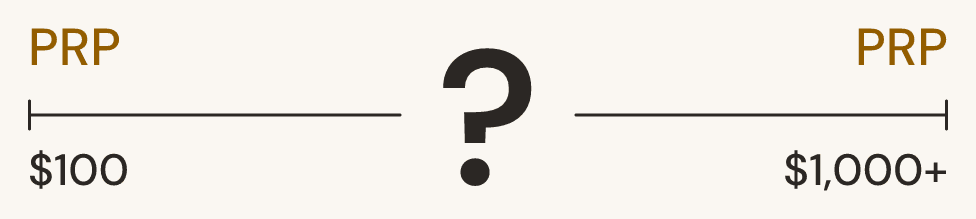
Doctors’ offices often charge more than $1,000 for Hair Growth PRP, yet you will find it advertised on Groupon for $100. The same three letters at wildly different prices.
Why the difference
- Different clinics use different techniques to make PRP: some use more advanced equipment and longer preparation time, which significantly impacts the contents of the PRP. Yet, the label is exactly the same across clinics. That makes it difficult for patients to differentiate between options and make an informed decision.
- Because the market is that opaque, people who can afford it often choose a physician's office simply because it is more trusted, which lets a physician charge for that trust as much as for the treatment.
WHAT TO ASK THE PROVIDER
Who examines my scalp, who prepares the PRP, and who injects it?
It’s important that they are able to provide you with the credentials of the clinician who will examine your scalp: a physician, NP, or PA. They should also be able to provide the credentials of the professional preparing PRP and the one injecting it. Learn more here
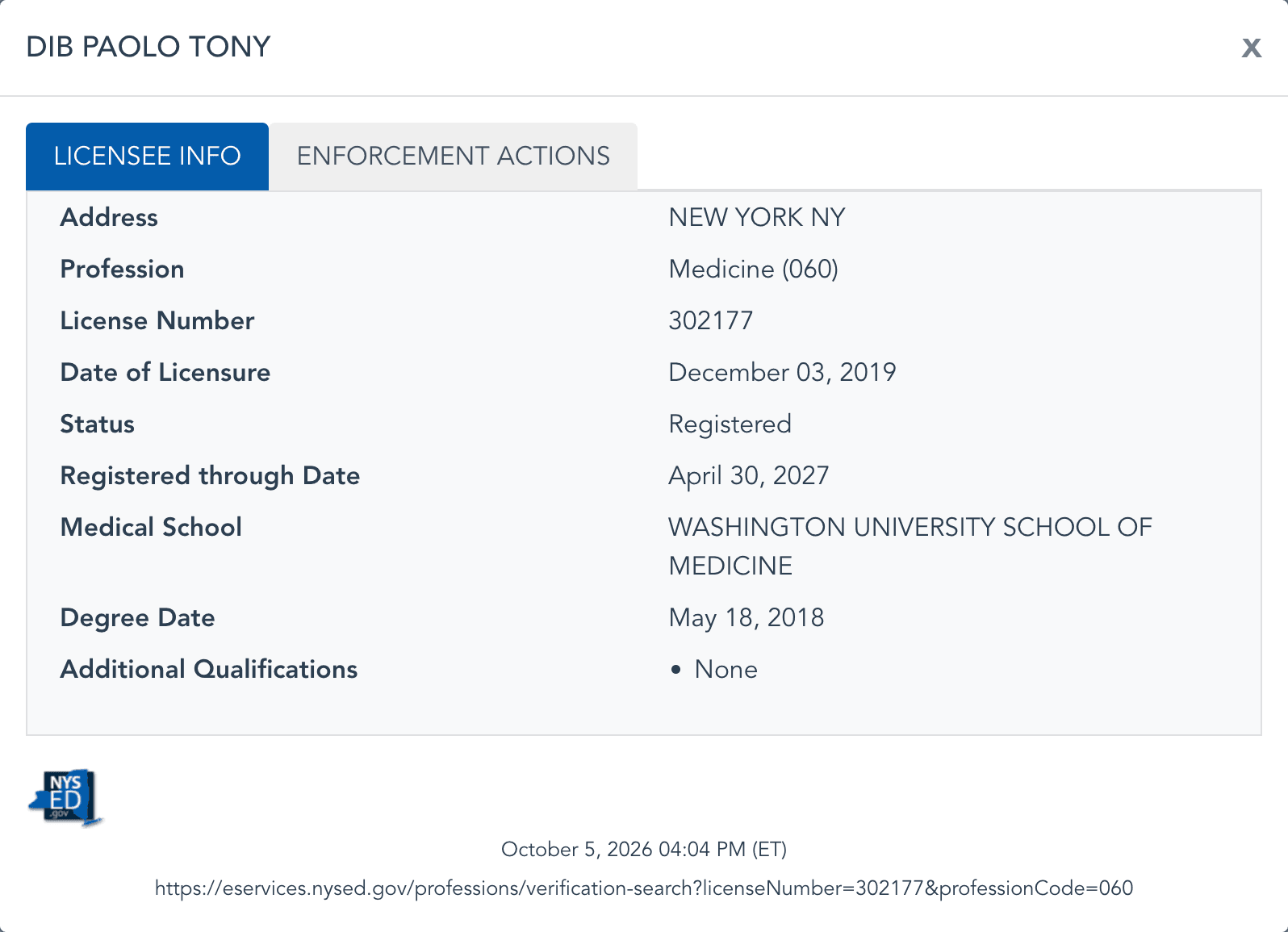
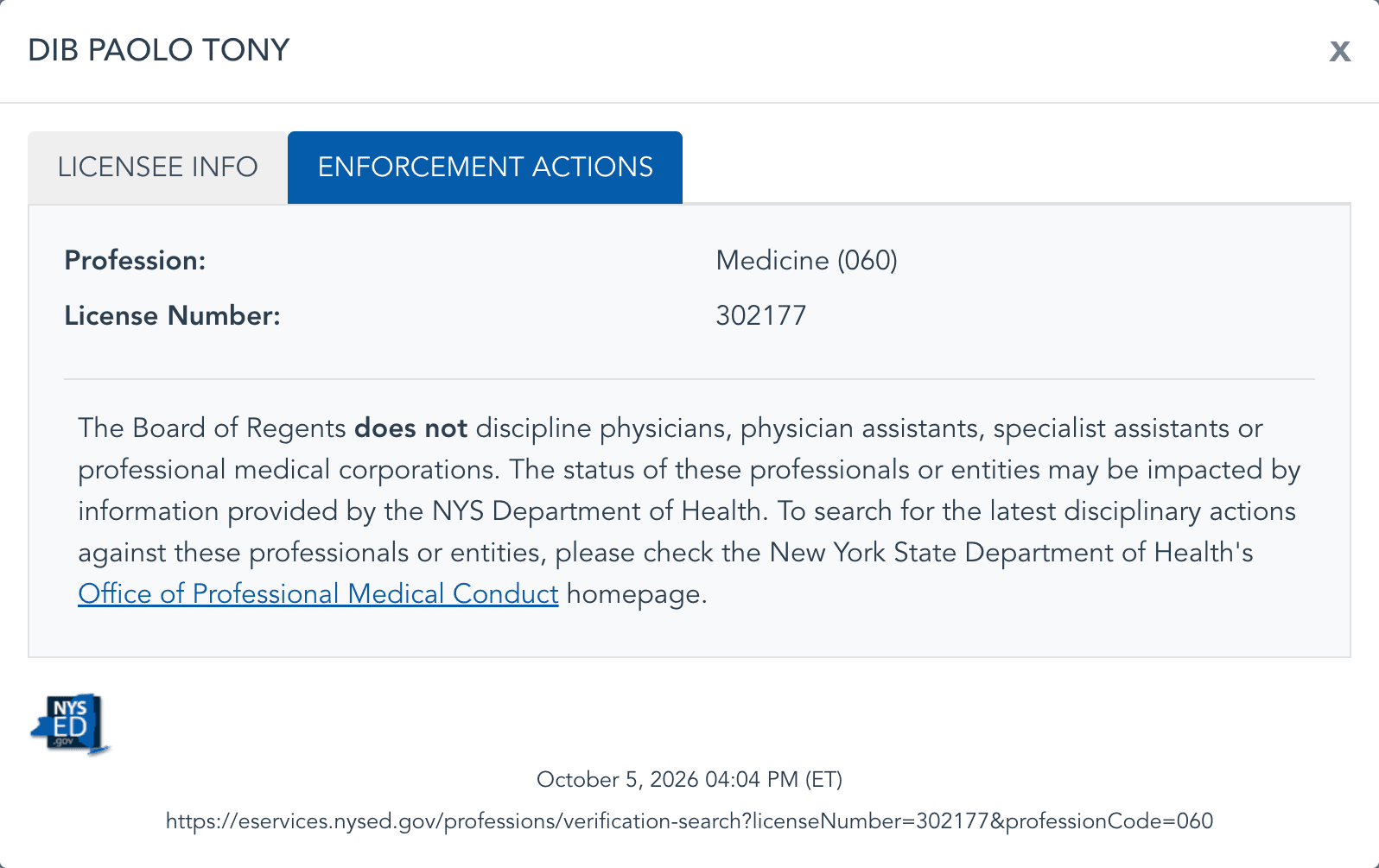
Qualified Providers will have an active license. If the provider is located in NY, check the provider's license at NY Professional License Search. The results should look like this:
How much blood do you draw, and how much ends up in my scalp?
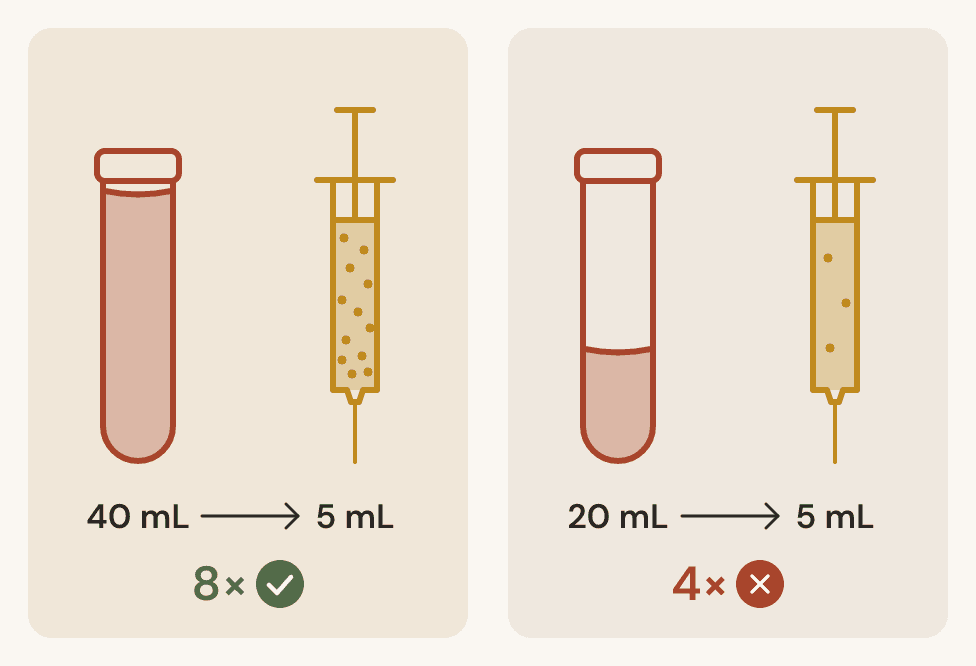
With both numbers you can estimate the fold-concentration yourself. Ideally it should be around 8-fold. Anything under 5-fold is a red flag. Calculate it by dividing blood draw by injected volume.
Keep in mind that the amount injected is a rough estimate because it depends on how large an area is being treated, but still helpful for estimating. The math behind it is explained here
Do you use PRP or PRF?
Sometimes the word plasma is used instead, and a practice should be able to specify which kind. Even though either PRF or PRP may be reasonable for you, PRP has most of the hair research supporting it so far. The full explanation is here.
What kits do you use to prepare PRP?
A good answer provides the specific manufacturer of PRP kits and of the centrifuge. Bonus if they can share whether they use single-spin or double-spin protocol, and their target platelet concentration
How do you prevent and treat pain?
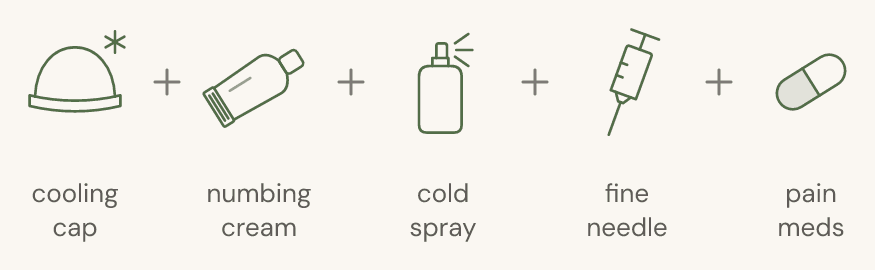
It’s important for the clinic to be able to list what pain relief options they offer, and for those options to span different modalities as opposed to a one-size-fits all approach. Examples of different modalities are cooling cap, numbing, cold spray, and medications. More information here
WHAT TO LOOK OUT FOR
Most practices do not publish any details about their technique, which is why it is important to know what to look for and what to ask about
Opaque or Unusually Low Pricing
Price should be thought of as a floor. Single-use PRP kits are the largest portion of the cost of a treatment ($150-$250), so a session priced below what a quality kit costs might be using cheaper, poorly studied alternatives to cut cost. Conversely, a high price-point doesn’t guarantee that high-quality kits are being used
Unproven or Vague Statistic
You might have come across clinics advertising “90% More Hair” with PRP. When you read numbers like these, look for the source and look for the details: did they measure hair density themselves? Does that number apply to every patient or only some people achieve it?
The rule of thumb is: any overly-generalized statistic without additional context to explain where it came from or who it applies to should be considered not trustworthy
Misleading Before-and-After Photos
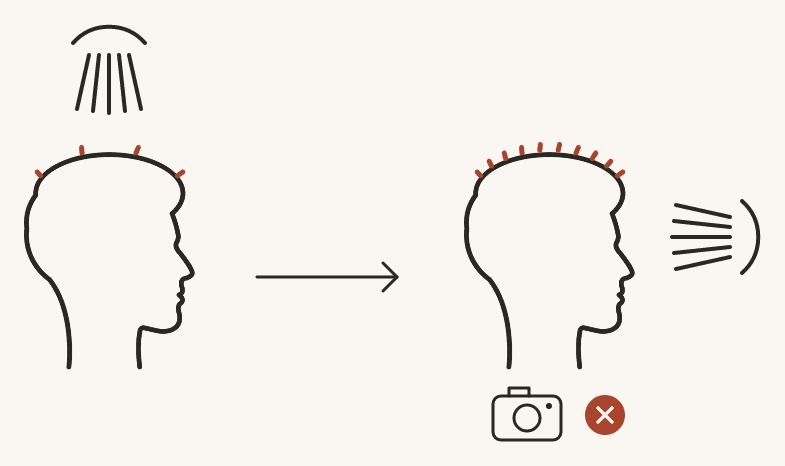
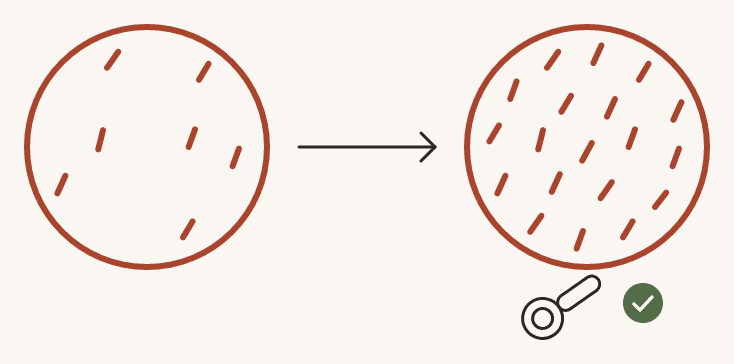
Make sure that any published before-and-after photos use consistent lighting, styling, hair length, and camera angle to avoid a false impact on apparent hair density
More objective measures of progress include trichoscopy hair count
Overly Confident Research Claims
Much of the research in this field, although consistently pointing towards the same findings, is considered small in scale. Any clinic claiming they have “proven” it is important to look for practices or providers who demonstrate their ability to understand the research landscape and to adapt their practice to the stay up to date with emerging findings
Unqualified Providers
New York State defines PRP as a procedure requiring licensed medical professionals to be administered. A recent report showed that eighty-seven businesses were cited for possible violations including the unlawful practice of medicine, and were using expired equipment
Look out for:
- “Spa” Without Medical Professionals
- Make sure the site or clinic is affiliated with a licensed medical doctor
Part 2: How Affirmed Works and Why
WHAT WE DO AND WHY
Each of the following is linked to a section on this page that explains the reasoning behind our protocol and our principles
- Amount Injected: 5mL
- Number of Platelets: >5 Billion
- Blood Draw Amount: 54mL
- Purity of PRP: Double-spin
- What’s added: Anticoagulant
- PRP or PRF: PRP
- Pain Management: cap, cream, spray, finest needles, meds
- Credentials: MDs and MAs
- What kits we use: EmCyte PurePRP
- Price: $600 per treatment
Every treatment costs roughly $600. We don't charge you all of it at once. Instead, we spread it over months, which is how our membership works. You can take a look at a breakdown of the cost here:
Paying your doctor, medical assistant, and technician
Your single-use PRP Kit and medical supplies like gloves and syringes
Facility, practice margin, and insurance
NOTES
We draw 54 mL of blood, and concentrate it into 5 mL of PRP using a double-spin protocol. That reason for that blood draw amount is to allow for a platelet recovery rate as low as 60% without compromising the final concentration.
The 80% recovery rate published by manufacturers is measured under ideal conditions, and we add a safe margin to make sure every single patient gets the effective target concentration, or more.
The total platelet dose injected using our technique is 5 -12 billion platelets, well beyond what is thought to be the minimum effective dose. The reason for the broad range is because of how much baseline platelet count varies from person-to-person.
We use the EmCyte PurePRP double-spin system. We favor double-spin over single-spin systems because it removes more white blood cells, which is the dermatology consensus. The entirety of our medical staff is licensed to work in the State of New York.
Part 3: How PRP Protocols are Designed
NUMBER OF PLATELETS MATTERS MOST
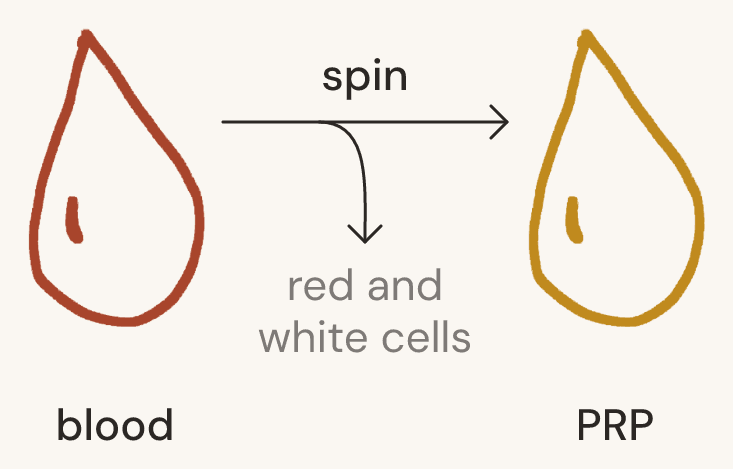
PRP (Platelet-Rich Plasma) is made by separating the components of whole blood, keeping platelets, and removing red and white blood cells. The reason platelets are kept is because they carry growth factors like PDGF, TGF-β, VEGF, FGF, IGF-1, and EGF. When injected, those growth factors are released, which is thought to stimulate hair follicles.
Everything that distinguishes one PRP preparation from another comes down to getting those platelets to hair follicles while leaving behind blood parts you do not want there.
- The amount injected
- The concentration of platelets in it
AMOUNT INJECTED
What appears to matter most for PRP efficacy is the number of platelets that reach hair follicles. But the amount of fluid a scalp can comfortably take in one sitting is limited, around 5 to 6 mL spread across multiple injection sites. Past that, the excess pressure can cause PRP to leak back out while also increasing discomfort and pain for the patient.
So the ceiling is fixed, and the only way to raise the number of platelets is to force a fixed amount of plasma to carry more platelets.
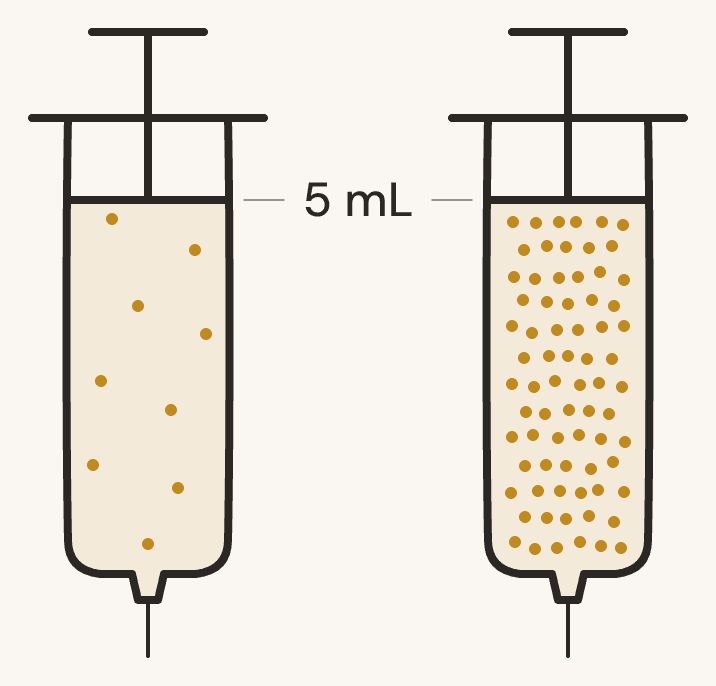
PLATELET CONCENTRATION
Research studies have shown that the concentration of platelets in PRP directly impacts the extent of hair growth. That’s why platelet concentration is the north star when designing PRP preparation techniques. Specifically, the target concentration is 1,000 platelets/nL
Reaching that target platelet concentration is challenging, because different people have different platelet concentrations in their blood at baseline. The normal reference range is 150 to 400 platelets/nL. So even though a specific PRP preparation technique can guarantee a fold-increase (e.g. 4-fold, or 6-fold) compared to baseline, it cannot guarantee a target concentration (e.g. 1,000 platelets/nL). That’s because the baseline varies widely from one person to another
It is also not practical to measure the platelet concentration of the PRP before injecting it to ensure it has reached that target concentration. So if the concentration is not measurable, and the baseline concentration varies widely from person-to-person, then how can we guarantee to reach that target concentration?
The answer is: assume that everyone has the lowest normal starting point, and shoot for the highest-fold concentration. This way everyone, regardless of their baseline platelet count, reaches the target concentration.
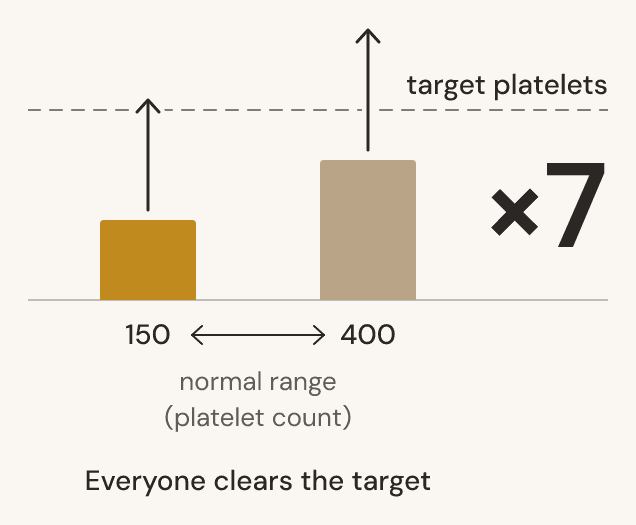
Here is an example using numbers
(1mL is used instead of 1nL but the math is the same)
The target concentration for hair growth in one nL of PRP is 1,000 platelets. The lowest normal platelet concentration in one nL of blood is 150 platelets. To collect that target number of 1,000 platelets, we take 7nL of blood
7nL of blood × 150 platelets/nL = 1,050 platelets
Round it down to 1,000 platelets for simplicity
The problem
The target number of platelets is reached, but not the target concentration. What that means is we have our target 5 billion platelets, but they are sitting in a whopping 35mL of liquid, which is impossible to inject because the scalp fits a maximum of 5mL
How to solve that
We need to squeeze those 1,000 platelets into one nL instead. So we concentrate it again using the centrifuge. That gets us to of 1,000 platelets in one nL of PRP, which is the target for effective hair growth
What that means for PRP preparation standards
Using the numbers above we calculate the fold-concentration, which dictates the PRP preparation technique. Specifically: 7nL contains the number of platelets needed, and those platelets are squeezed into 1nL. That is considered a 7-fold concentration. So the practical, universal target becomes “7-fold”. PRP preparation techniques that hold themselves to the 7-fold standard ensure that any patient, regardless of their baseline, reaches the target platelet concentration and maximizes their chance of hair growth
HOW THAT DICTATES THE BLOOD DRAW
To cover the entire scalp, about 5mL of PRP needs to be injected. The target platelet concentration of PRP is 1000/nL. That’s a total of 5 billion platelets needed. This number dictates the amount of blood that should be drawn. Here’s how to calculate it:
Make sure to get the total number of platelets needed
A total of 5 billion platelets need to be injected, and every platelet you receive has to come out of your own arm. Although your platelet count can be used to calculate the amount of blood to draw, it’s practically impossible to measure platelet count at every PRP visit, and your own counts change from one visit to another. That’s why we use the lowest normal platelet count instead: it is a safe assumption that makes sure that you reach or supersede the target
Make sure to account for the fact that platelets are lost in the preparation process
The target number of injected platelets is not the same as the target number of drawn platelets. The 5 billion platelets target above isn’t actually enough for the blood draw because PRP preparation is not perfect, and platelets are lost in the process. A typical recovery rate is 80%, meaning that 20% of platelets are expected to be lost during PRP preparation. To end up with 5 billion injectable platelets, you need to draw 6.25 billion platelets
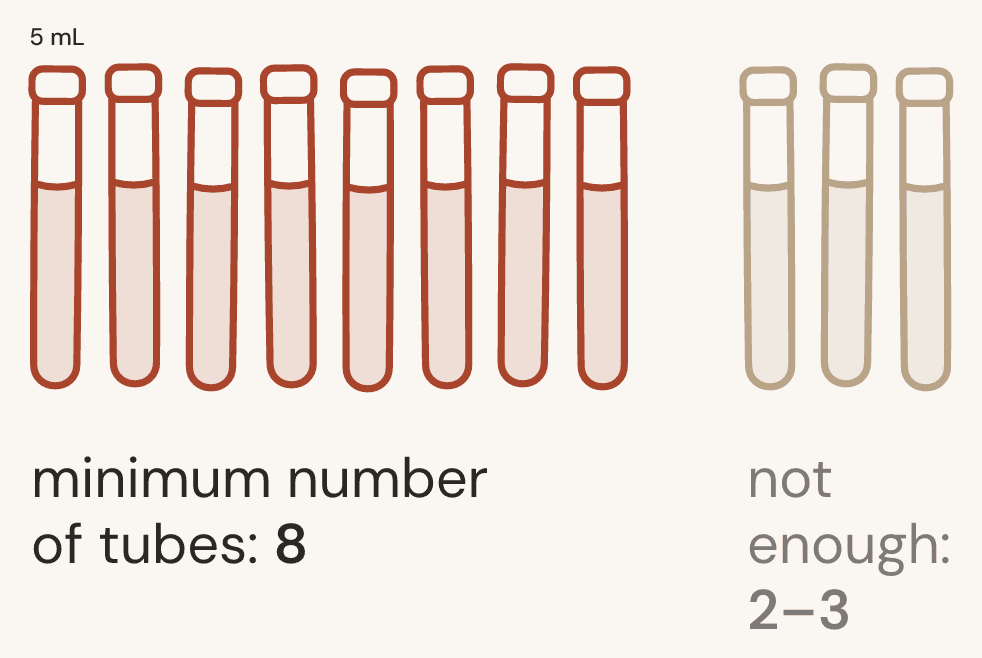
Note on 7× vs 8× fold: Even though we established that we want to achieve a 7× fold concentration, we instead need an 8× fold ratio between blood amount and resulting PRP to account for that 80% platelet recovery rate. So when calculating the amount of blood to draw, 8-fold minimum is the rule of thumb. If you want to inject 5mL, you need to draw a minimum of 8 × 5mL = 40mL (rounded down)
Putting it all together
In a patient with the lowest normal platelet count (150), the calculated amount of blood drawn needed is 41mL. That is equivalent to drawing about 8 small tubes (the ones used for routine blood work). For that reason, a clinic that draws blood in 2-3 small tubes cannot possibly reach the target concentration and the target injectable volume, whatever equipment or technique they are using
OTHER FACTORS THAT PLAY IN
HOW PURE IS THE PRP
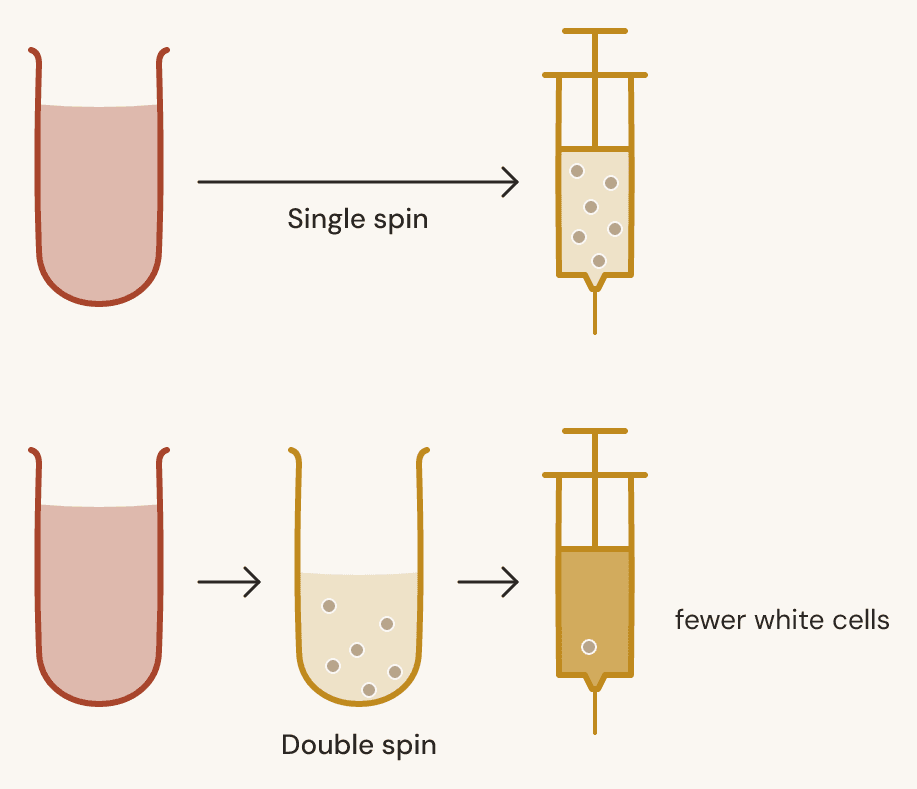
Consensus among experts favors removing the majority non-platelet blood elements like red blood cells and white blood cells to reduce undesired effects such as bruising and inflammation at the injection site, though evidence for how much it matters from a therapeutic perspective is inconclusive
The way that this factors into PRP preparation technique is deciding how many times to spin the blood products before injecting them into the scalp:
- Single-spin means the blood is only spun once in the centrifuge, then the PRP is pulled into a syringe and injected
- Double-spin means that the PRP obtained from the first round is spun a second time in the centrifuge. The purpose of the second spin is to reach even higher platelet concentrations, and to purify PRP further by removing remaining white blood cells
WHAT WAS ADDED TO THE PRP
There are two potential agents that can be added to PRP: one is required, and the other one is optional.
Anticoagulants
Virtually all PRP uses anticoagulants (see PRF by comparison). Anticoagulants prevent the blood from clotting so it can be spun harder and longer in the centrifuge. Spinning is required to reach the target PRP concentration. The main anticoagulant used is sodium citrate, a standard, safe agent used broadly in medicine.
Activating Agents
Activation agents force platelets to release their growth factors early, while still in the syringe. The alternative is to allow for natural release of growth factors after injection into your scalp. There is no solid answer on whether that is better. The two available agents are calcium chloride and calcium gluconate. They are thought to cause more pain with injection.
PRP OR PRF
Some practices offer PRF, or injectable PRF (iPRF). It’s a different preparation that’s spun without anticoagulant and it needs no single-use kit at all, which is the most expensive part of PRP preparation. A 2026 laboratory study compared PRP and PFR from the same donors' blood: PRP came out roughly 3x more concentrated in platelets and carried around 13x the PDGF growth factor concentration. PRP concentrated platelets around 6-fold, whereas PRF under 2-fold, well below the target we describe above
INJECTION COMFORT AND PAIN MANAGEMENT
Pain during PRP injections is expected, and it varies a great deal between people. It improves very quickly afterwards. What is important to ask is what a practice actually does to prevent the pain.
Pain control can be achieved in many different ways, and the best pain reduction approach combines multiple of the interventions listed here:
- Numbing cream
- Cooling caps prior to injection
- Cold air during injection
- Vibrating devices to distract from the pain
- Nitrous oxide to help with relaxation (laughing gas)
- Cold spray immediately before each injection
- Using the finest needles
- Oral pain meds to prevent soreness afterwards.
- Regional anesthesia injections (rarely offered for PRP)
CREDENTIALS OF PROVIDERS
Preparation and injection are technique-sensitive, and both are commonly delegated to nurses, phlebotomists or technicians, which is often perfectly appropriate. What varies is whether a physician or a qualified clinician is involved in any part of your assessment and treatment
Staff credentials also matter to make sure you are correctly diagnosed, and that your scalp is examined by a clinician. A correct diagnosis matters for two reasons:
- You might have an undiagnosed cause of hair loss that is treated with other means than PRP
- You might have more than one contributing factor to hair loss, and PRP might work even better if done in synergy with other treatments
The current compliance landscape
In January 2026 the New York Department of State published the results of 223 med spa inspections. Eighty-seven businesses were cited for possible violations including the unlawful practice of medicine. Investigators reported expired and suspected counterfeit products, controlled substances, and used needles . Among the medical devices found on site were centrifuges, which were likely used to offer PRP
What NY State requires from PRP clinics
The state lists plasma treatments among the procedures that require a medical licence, alongside injections of any kind and microneedling. A business offering them must be licensed as a medical facility or a medical practice, with a licensed physician as medical director. It is also lawful for nurse practitioners, physician assistants, and registered nurses to work within those practices
What the state tells consumers to check:
- The medical director's name and credentials should be easy to find on the website. The state calls their absence a red flag.
- A practice organised as a PC or PLLC must hold a Certificate of Authorization from the State Education Department, which you can verify yourself online
- A medical practice may not have the word "spa" in its name. The state treats one that does as a signal of other violations.
- A physician's disciplinary history is public, through the Department of Health's Office of Professional Medical Conduct.
Qualified Providers will have an active license. If the provider is located in NY, check the provider's license at NY Professional License Search.
NOTE ON RESEARCH STUDIES
Even though research has informed most protocols for PRP and helped advance the field, marketing sometimes misleadingly suggests that the studies behind it are larger or more robust than they are. Partly, this is because almost everything known about protocols (concentration thresholds, the case for removing red blood cells, spinning technique) comes from orthopedic and sports medicine, where PRP has been studied far longer, and has included larger groups of patients.
What research questions are still open, and what we are watching
A randomized controlled study comparing different techniques head-to-head would help inform and solidify protocols on the following:
- Optimal PRP platelet concentration
- Optimal Volume injected into the scalp
- Activating agent vs no activating agent
- Efficacy of PRF compared to PRP
Medically reviewed by Paolo Dib, MD, CEO and Medical Director ·